

Some children need extra support to learn to say certain speech sounds.
At Sweet Speech therapy, we assess your child’s speech and make a personalized plan to help them develop clear, confident communication.

Understanding types of speech sound difficulties

ARTICULATION
Articulation is how we position and move our lips, tongue, and jaw to produce speech sounds. Difficulties may include lisps, distorted or slushy sounds, or trouble producing sounds such as “r” or “s.” For example, a child might produce an “s” sound with their tongue between their teeth or have difficulty finding the correct tongue placement to say a clear “r.”
PHONOLOGY
Phonology involves the rules and patterns that govern how speech sounds are used in words. Children with phonological difficulties may replace one sound with another (e.g., “tar” for “car”) or leave sounds out (e.g., “ba” for “bat”). These can be typical in development, but require support beyond certain ages.
MOTOR SPEECH
Motor speech involves how the brain plans and coordinates the movements needed for speech. Children with motor speech difficulties may say the same word differently each time, have difficulty producing vowels, or use unusual rhythm and stress when speaking. This includes childhood apraxia of speech.
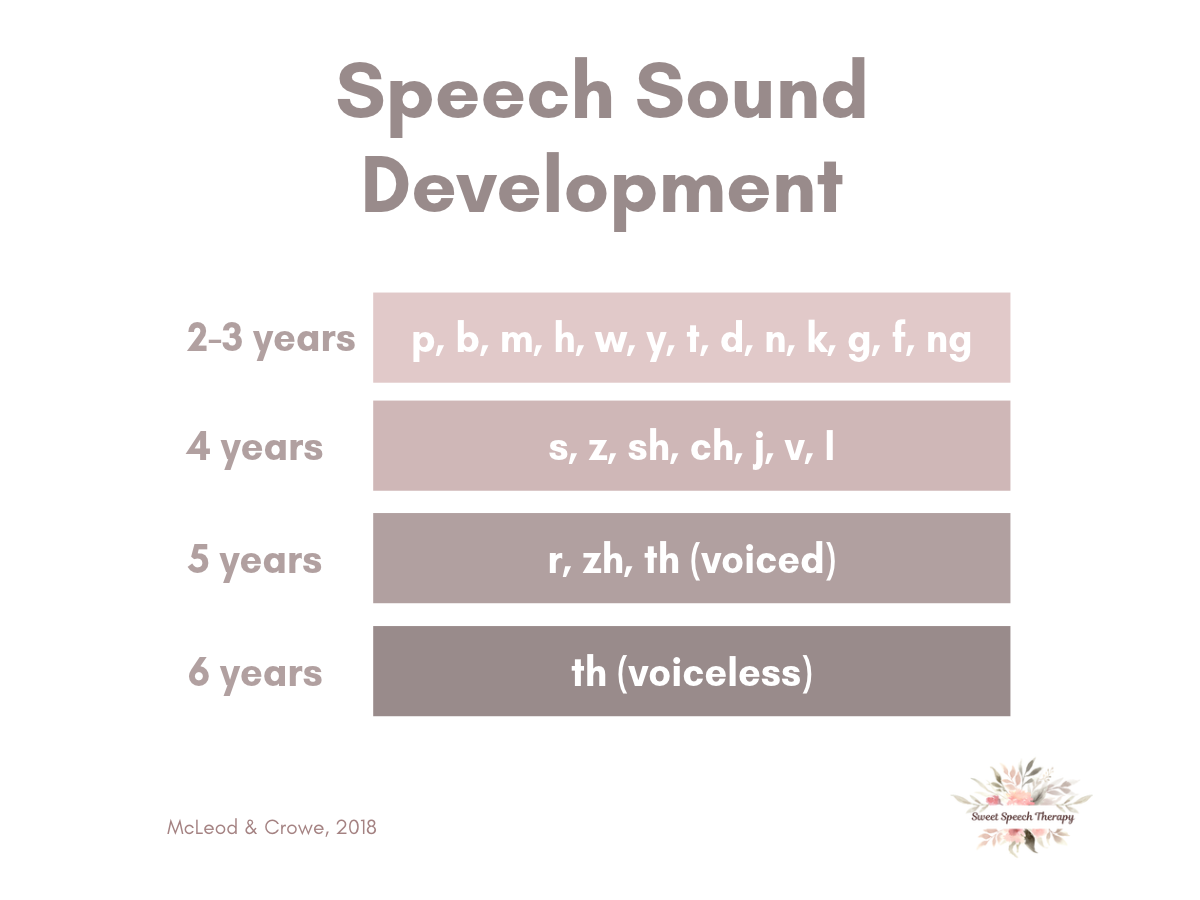
Speech development can vary from child to child. This is a general guide, not a diagnostic checklist.
HOW WE CAN HELP
Following an online assessment, we'll create a personalized therapy plan using approaches tailored to your child's unique speech sound needs. Our goal is to help your child communicate more clearly and confidently.